
As someone who has assisted on and taught craniosacral trainings for 13 years, this has always been a point of contention. How can anyone: practitioner, student or client be in a state of complete ‘no-mind’ or non-doing with each other?
There is always some form of intention: the person has decided to come; that’s intention. However the consult flows before you put your hands on: that is intention. You negotiate a contact as practitioner: that is intention.
But then the listening really starts and the body can communicate its needs. If we can come into quite specific contacts with an ease and comfortability, then deep parts of the self can express. This is what we were further exploring with the Sphenoid & Birth of Intelligence post grad recently.
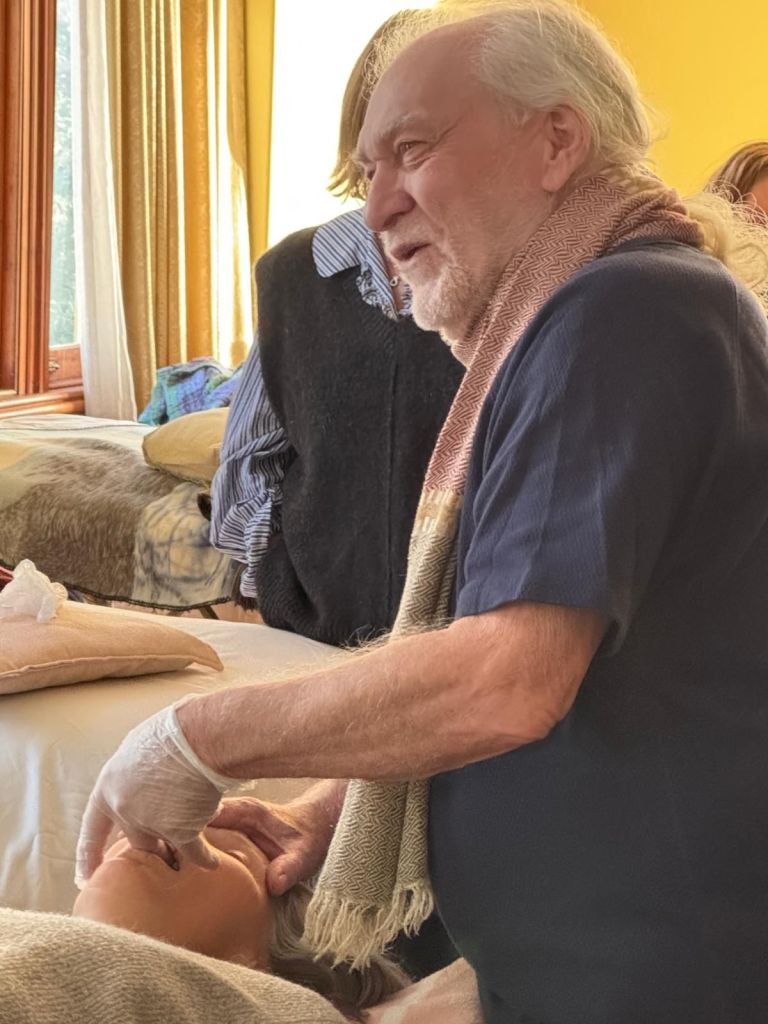
Etienne’s approach is a mix: quite structural, having originally come from an Upledger/biomechamical model; but also deeply connected, with a meditative teaching background and approach. He guided the whole room in sessions like a performance poet: rather than leaving each of the 11 tables to chance, we were being moved by the gravitas of his experience and presence.
As assistant, my role is usually in part, jumping in when needed or gathering props for practitioners, but because of the way in which he held the room, it almost felt like an invasion to do those things. I lay down on the table to join in to experience the guided meditation and my sphenoid was like a marionette, following along to the directions the puppeteer was ‘suggesting’.
There was no need for another practitioner, no need for a specific contact, just the knowledge of those structures and a suggestion that they could optimise if they wished.
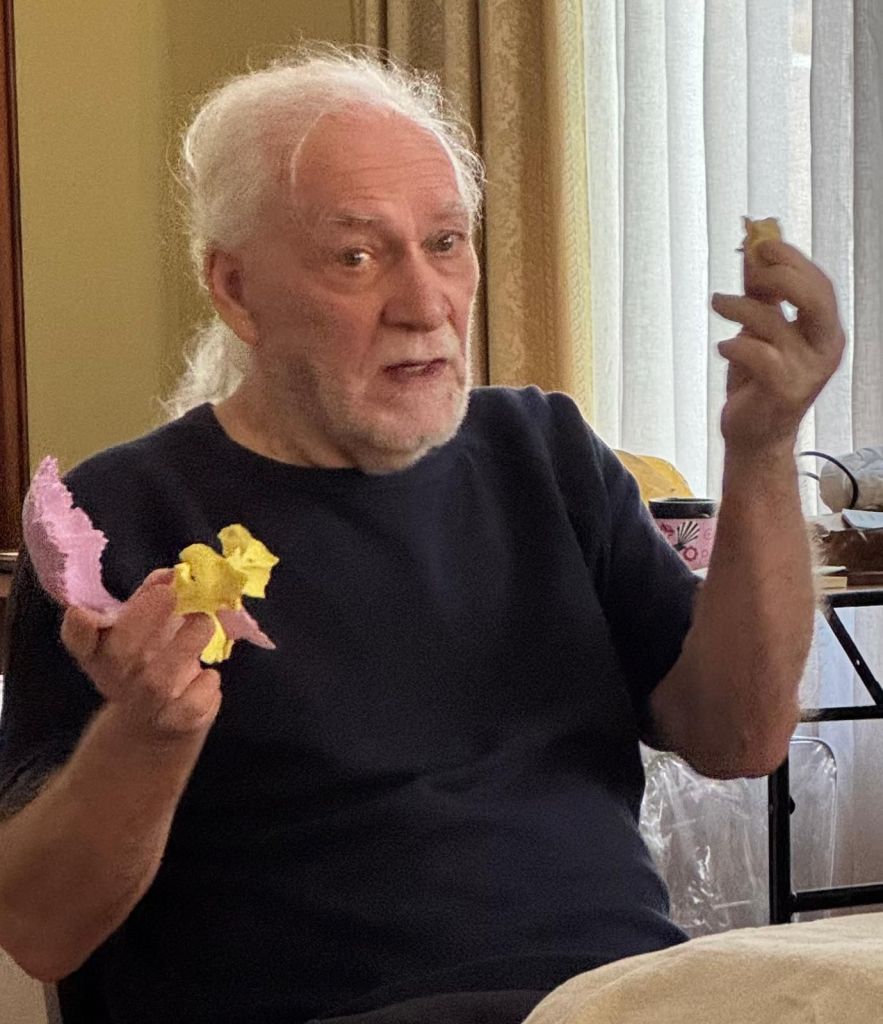
Etienne did actually come over and make contact with my system while I was on the table, ‘you have a fun head’ – ain’t that the truth; but he also did this whilst holding and vocally leading a room of 20+ practitoners. He would wander away after a minute or two of hands on and then ten or so minutes later, pick up and make contact again, once again amplifying things in my system before wandering the room again.
We are cells in relationship. For a long time when I was a student, I questioned my skills as a practitioner, as my teacher saw the body and anatomy in 3D. I don’t. My way is different; I have a kinaesthetic knowing, a noessence. This is what I now convey to my students – there are many ways. The work is finding YOUR way and Etienne, it seems, perceives more like I do. “It resonates in my body when it’s real. You’re naming it, but not expecting anything from it.”
I came from performance, not biology or anatomy, so my imposter syndrome was very real when I started out. Arguing with scientists about quantum mechanics and how we can affect change. To those used to being ‘fixed’ and unfamiliar with subtler modalities, working in these ephemeral spaces with BCST, a non-manipulative work, would lead to “but you’re not doing anything?”
These days, I still don’t ‘do’ anything, but get called magic, or witchy, or full of voo doo or woo woo. People surprised that their childhood trauma has no power anymore, or their hip isn’t sore, or they’re finding it easier with their relatives.
Up till this point, BCST is all I’ve needed, but ironically, a few weeks before doing Etienne’s course, I was learning Romiromi in Rarotonga from Wikitoria Oman who learnt from Papa Joe/Papa Hohepa Delamere; dancing with deep physicality and spirituality as an acknowledgment of where someone is at, just as I was doing with Etienne;
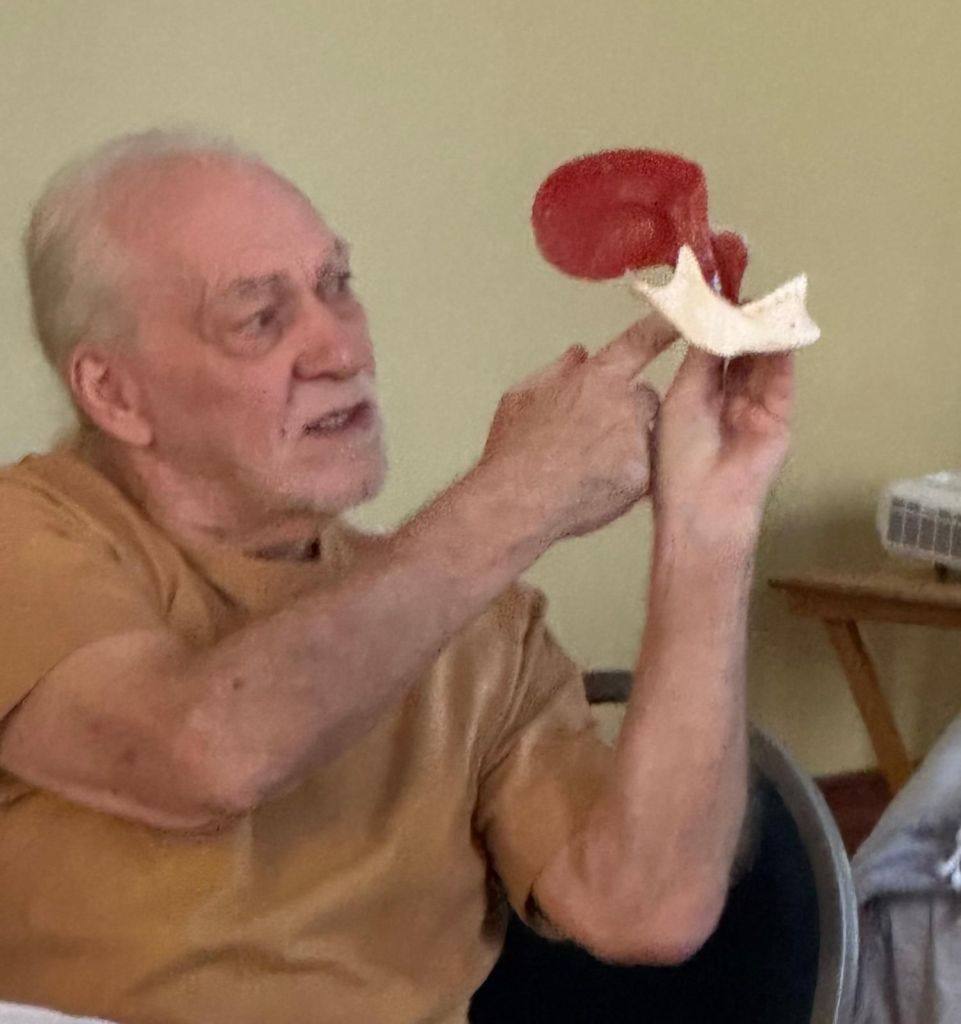
“It’s an evolution. Osteopathy to Craniosacral. Sutherland (who learnt from the founder of Osteopathy, AT Still and wrote much of the discourse around it) shifted his whole approach to Biodynamic. It’s a whole package. Don’t be afraid to be mechanical if needed and go into total stillness if needed. What does the body need?…sometimes the mechanical stuff is just needed…Some bodies will refuse mechanical work and others, the silence.”
This is where I’m still evolving. We are all one. We are all made of the same stuff. When we are with health, we are tapping into flow, into ‘no-mind’ and trusting the wider forces that grow all things.
All indigenous cultures know this. Honouring the indigeneity of craniosacral, knowing that AT Still was appropriating Shawnee and Cherokee Native American knowledge when he created Osteopathy. Living on this whenua in Aotearoa and honouring the whakapapa of indigenous mahi by being able to now deepen my practice with the mātauranga of Reo, Rongoā and Romiromi.
I will forever be a learner and forever be humbled by the process – no matter how many thousands of sessions I may have given. Each new client, and even each new session with someone I’ve worked with for years, offers the potential for possibility. Here’s to the no-mind.
I love my work.

